
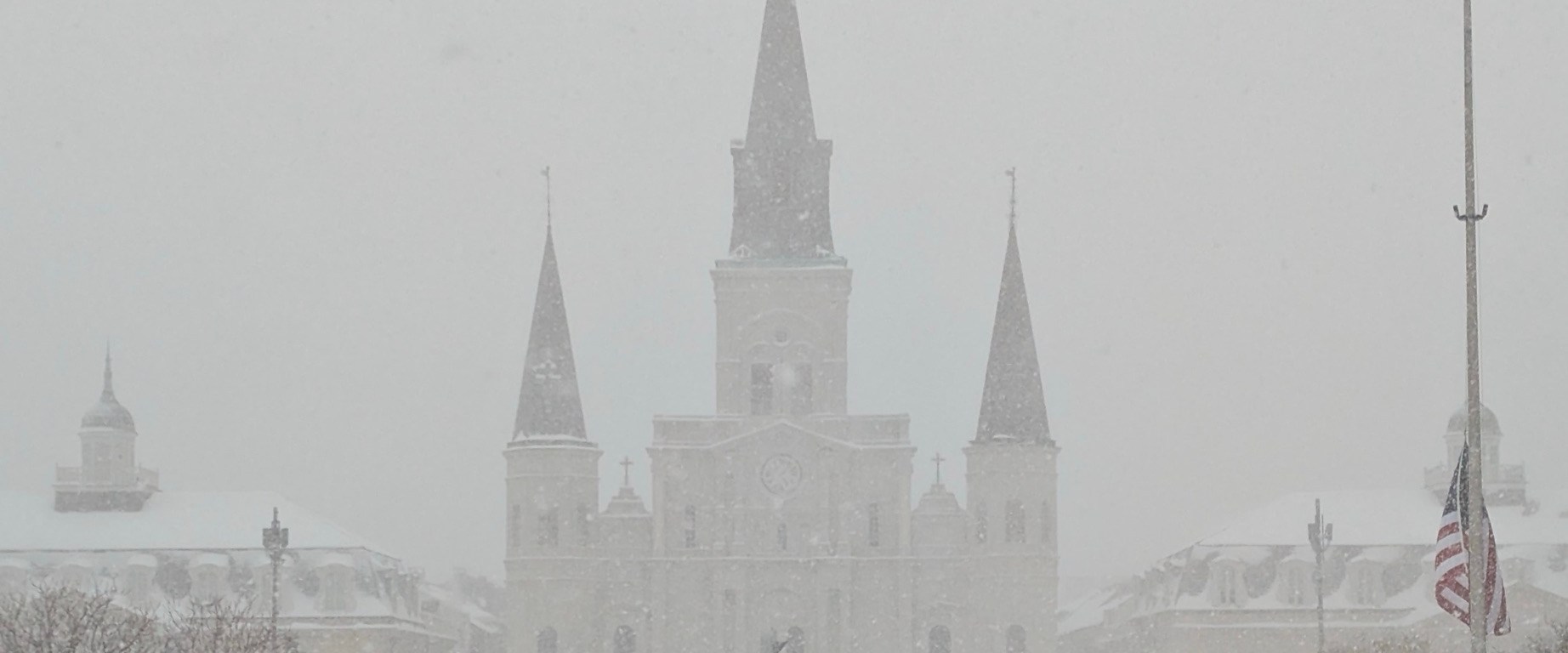
It’s silent on Bourbon Street, save for the sound of my boots crunching on snow and ice. No cars or people can be found. In the distance, if I strain my ears enough, I can faintly make out the sounds of voices, likely congregating near one of the few open bars.
It’s Wednesday, January 22nd, the day after historic Storm Enzo struck Louisiana and left six inches of snow in its wake in a single day. What my partner and I had envisioned as a fun holiday weekend in New Orleans during a cooler time of year has transformed into a nearly week-long visit – and we certainly got more cold weather than we’d bargained for. Our original flight had been scheduled to fly out on Tuesday, the same day the stom was expected to hit, and as our newfound friend Scott had said while we sipped Hurricanes at Pat O’Brien’s piano bar the Sunday night prior, we aren’t going home for a while.
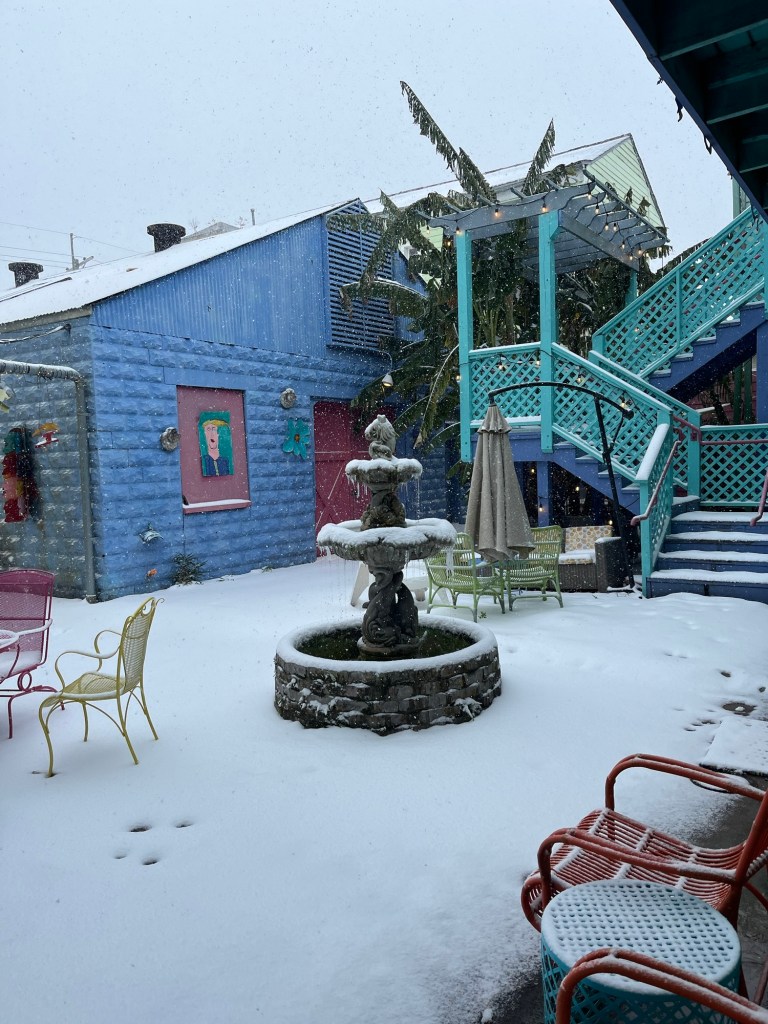
At this point, our flight home has been cancelled six times and we’ve rebooked nine times. Yes, there were plenty of winter storm warnings prior to our trip, but how often does it snow in New Orleans? Not since February 1895, so we hedged our bets and hoped the meterologists might have been exaggerating the entire story. The joke, of course, was on us when, on the morning of January 21st, the unexpected silence of the fountain outside our hotel room awoke us, and we ran to the window to see it had frozen over, with the entire courtyard blanketed in snow.
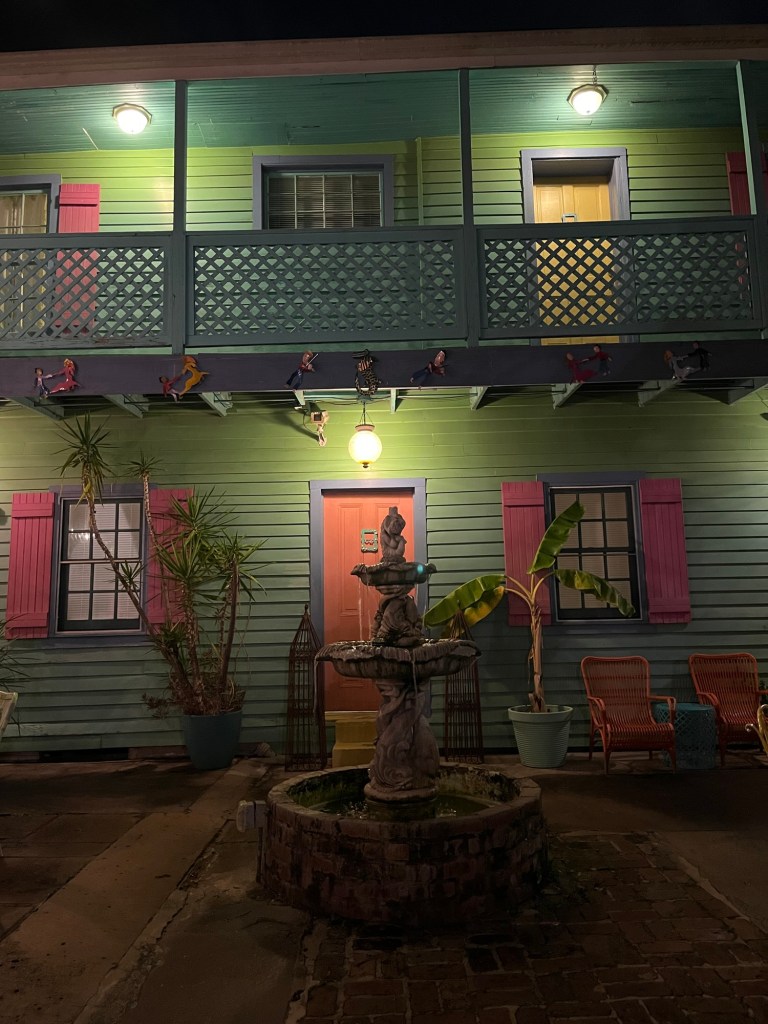
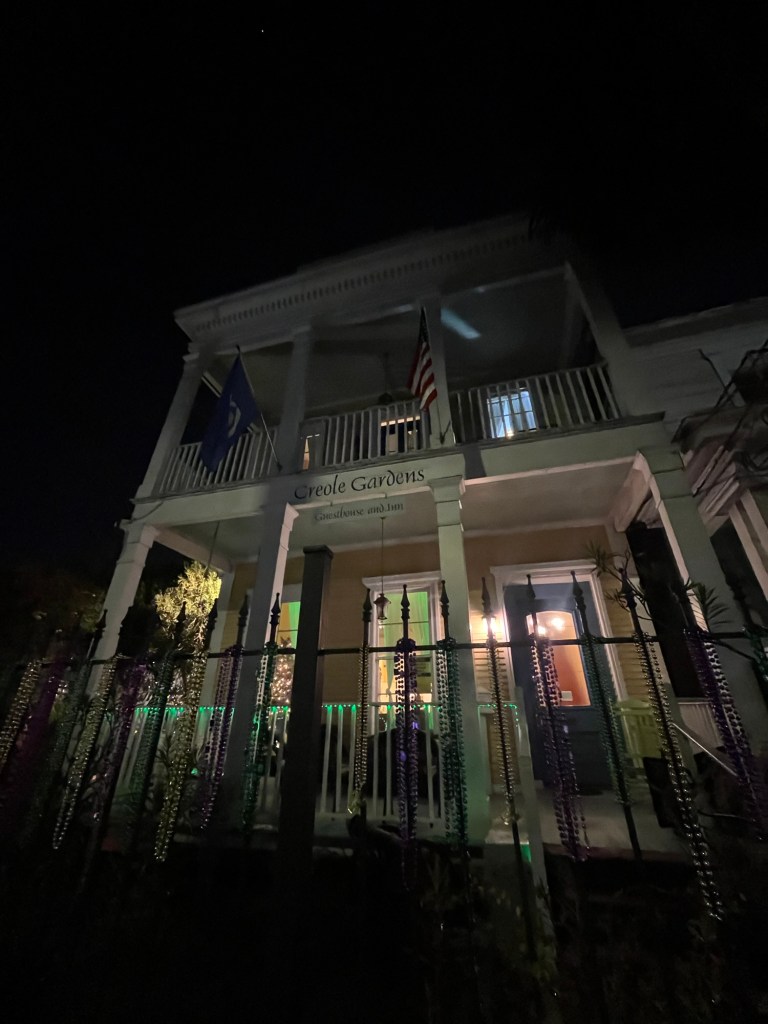
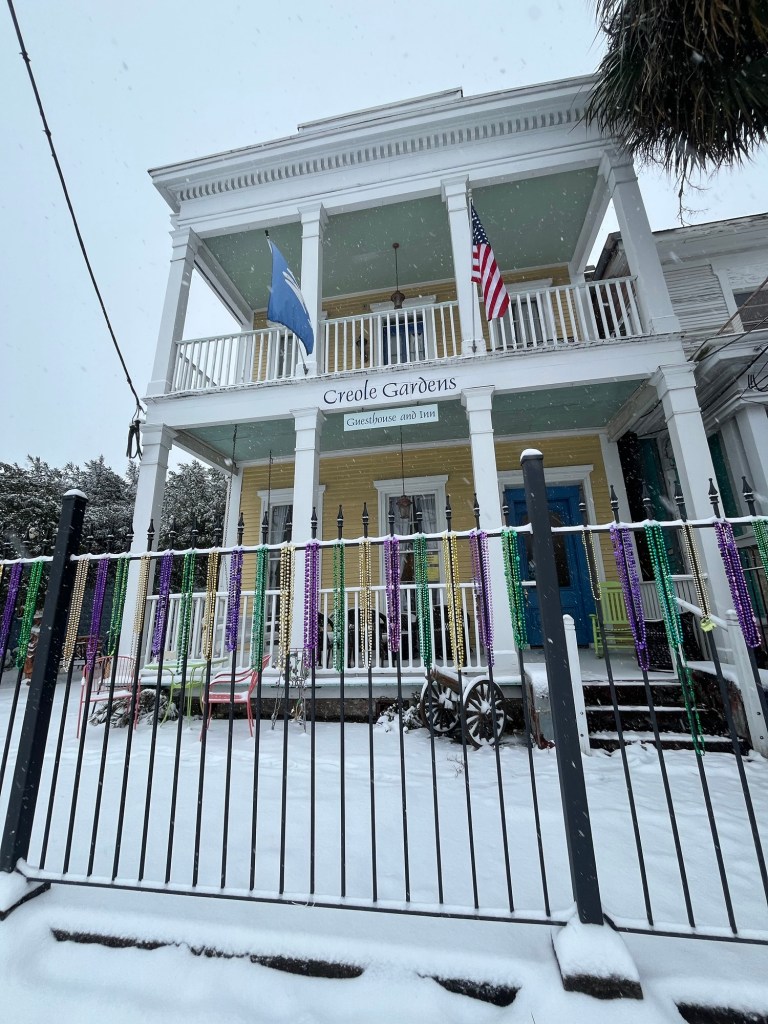
We start each morning sitting down to a homemade breakfast in the parlor of the Creole Gardens Bed and Breakfast Hotel. This vibrant inn has now come to feel like our home, with its kind staff and their freshly prepared-to-order grits and omelettes greeting us every morning. Each day we wonder if today is the day we fly back to San Francisco, and each day we receive the now expected text that our flight home has been cancelled and moved to the following day. It’s fair to say the staff is used to extending our stay at this point.
Of course, New Orleans is far from the worst place to be stranded, even during a snowstorm. On the morning of the storm, we trekked from our inn to the French Quarter, marveling at the sudden change in the landscape from just even 12 hours prior. The Creole Gardens Bed and Breakfast is located in the Garden District, making the walk to the Quarter around 30-40 minutes long, a trek that feels longer when your feet are plunging into snow that reaches past your ankles.
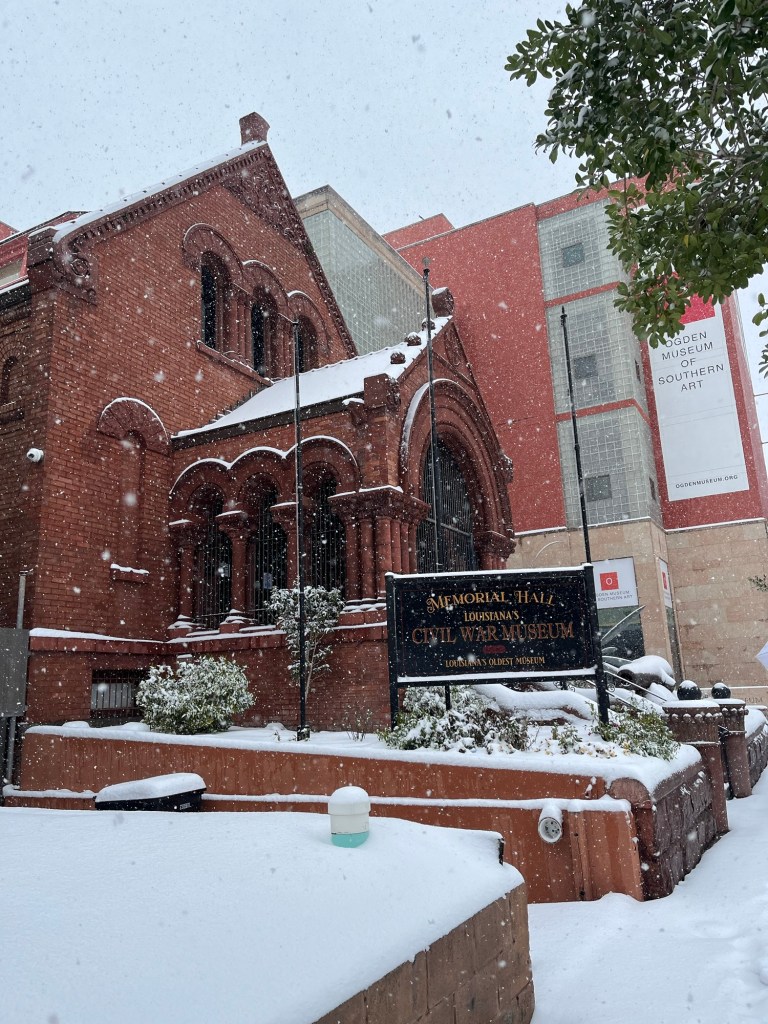
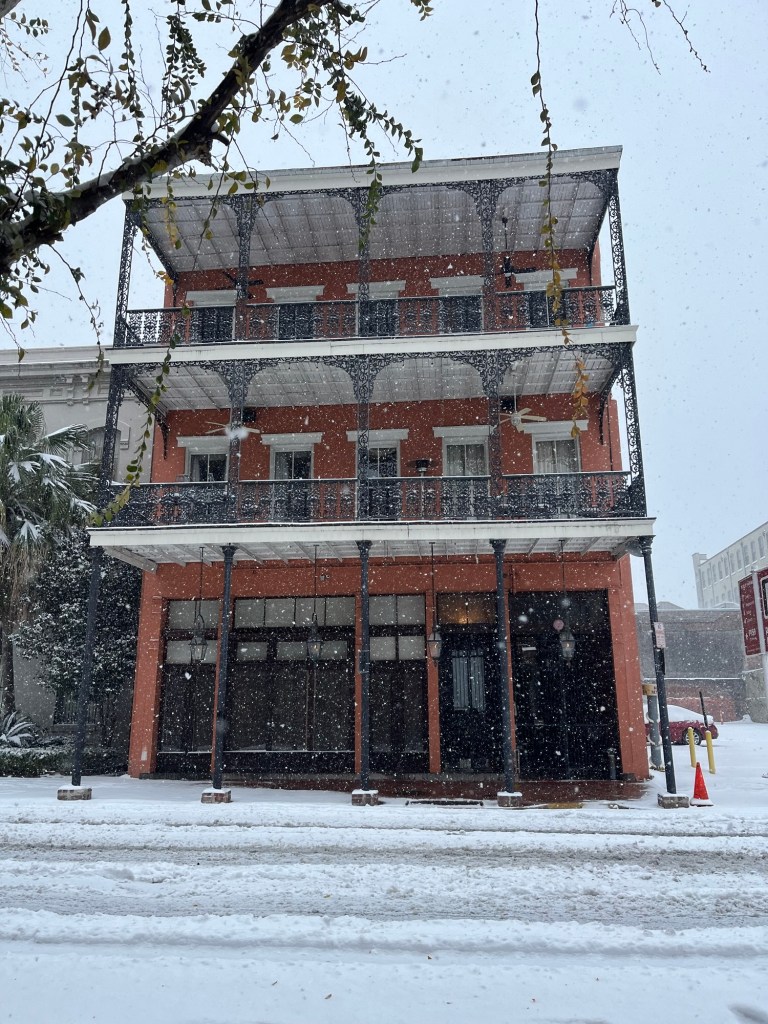

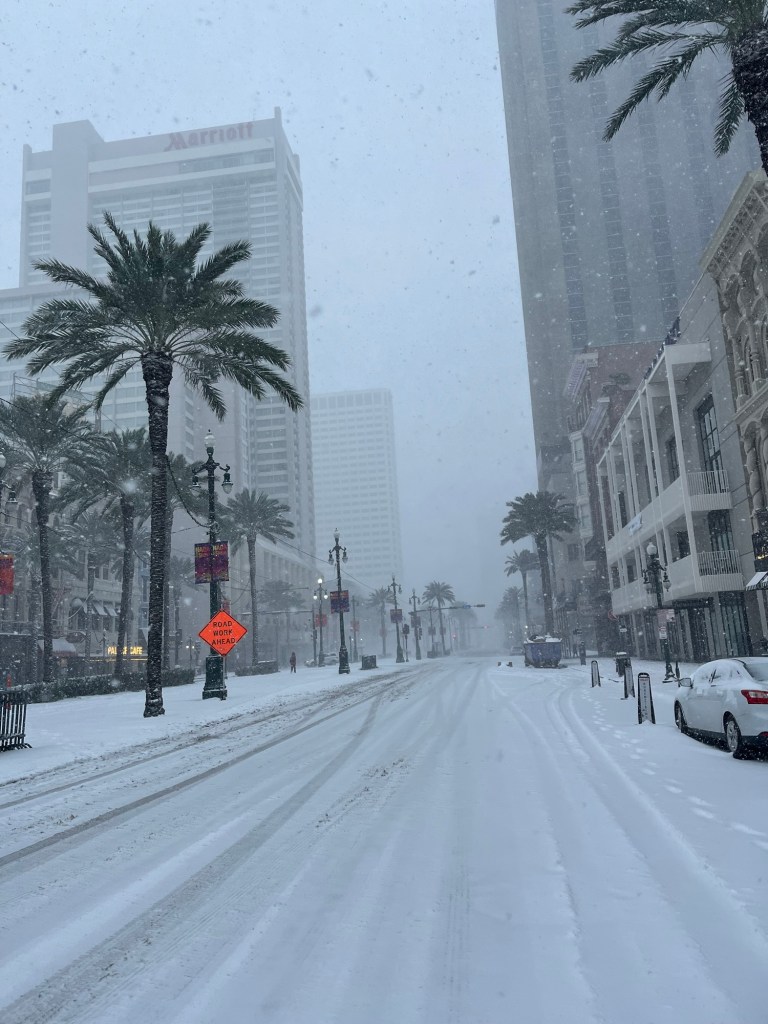
We stopped into Cafe Beignet for hot chocolates and, of course, beignets, watching the snow gently but steadily fall outside, the small shop packed with giddy tourists and locals alike.
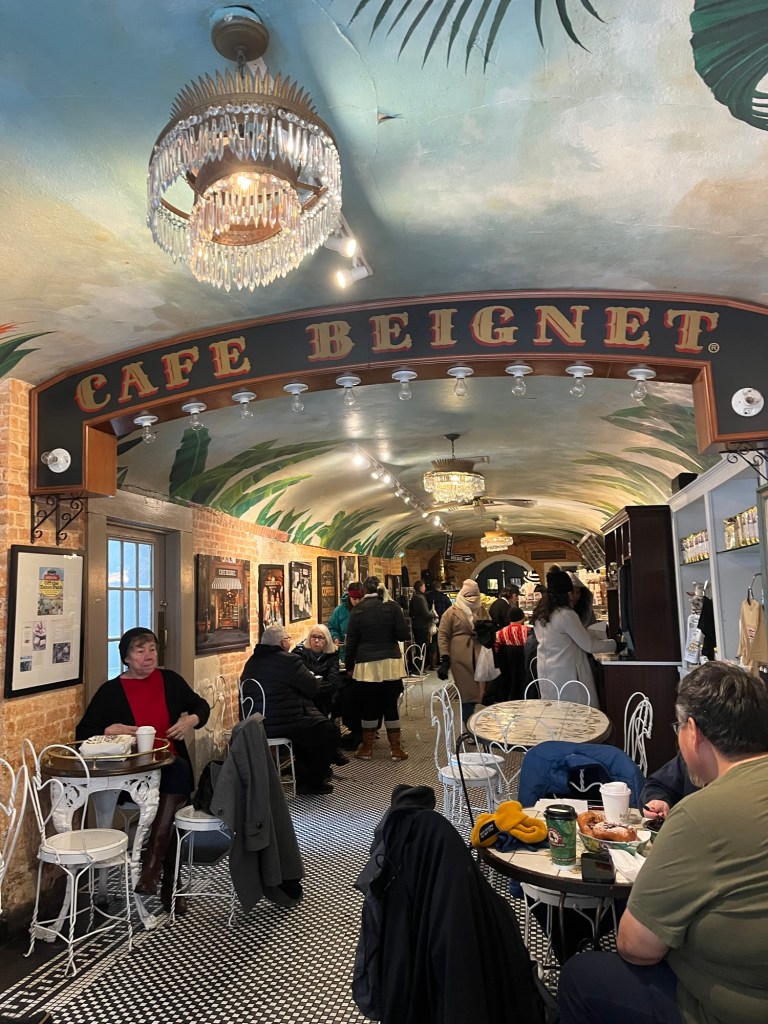
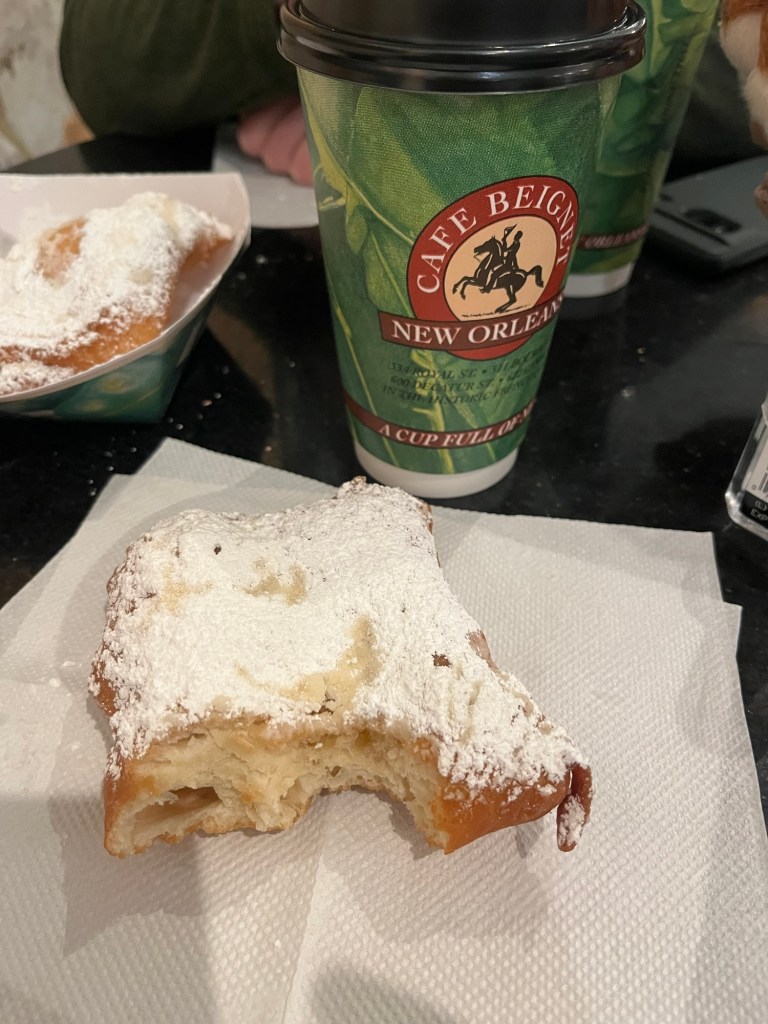
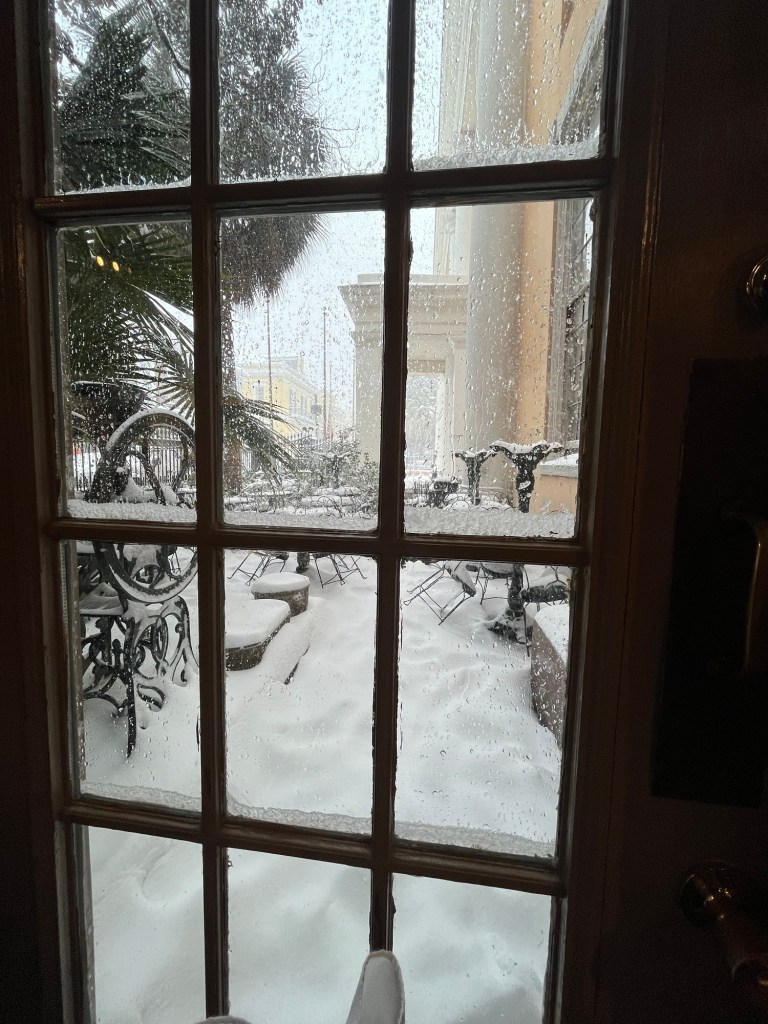
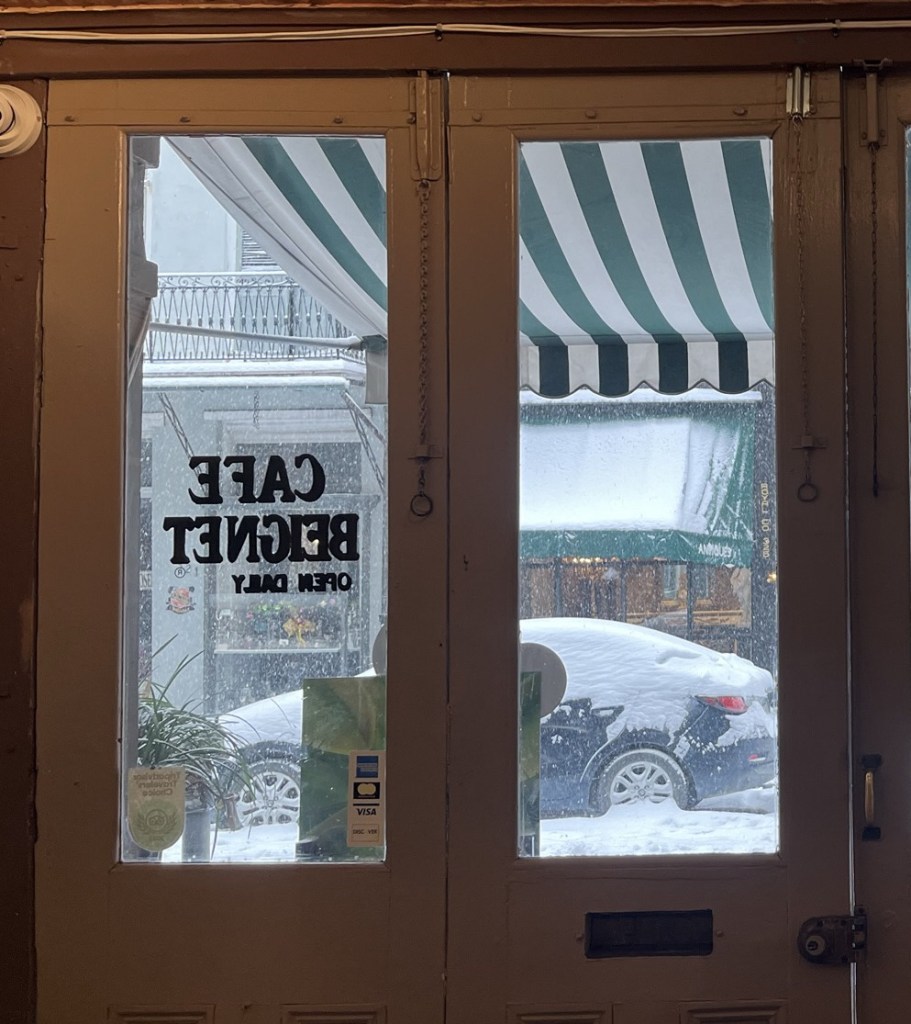
We spent the rest of the day taking pictures in Jackson Square, watching a few street musicians playing their instruments until their fingers were too frozen to go on, enjoying the sights of people sledding on cardboard boxes and offering free rides, and popping into bars to warm up and chat with other stranded tourists. (The bartenders probably had never been asked to make so many hot toddy’s at once!)
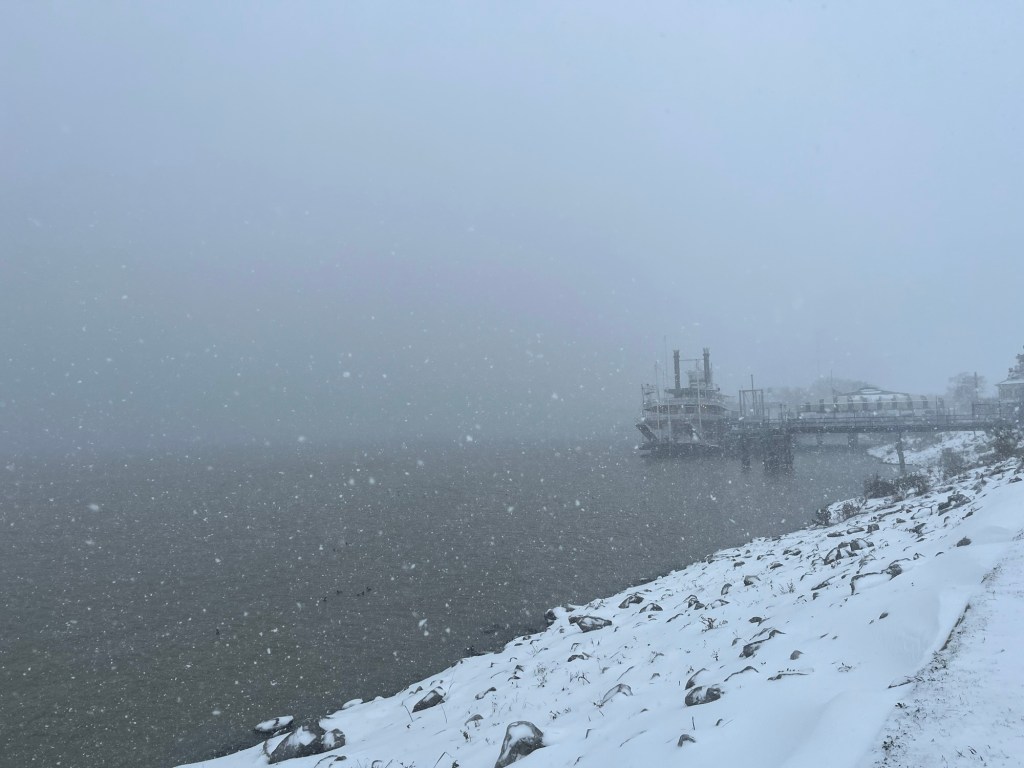
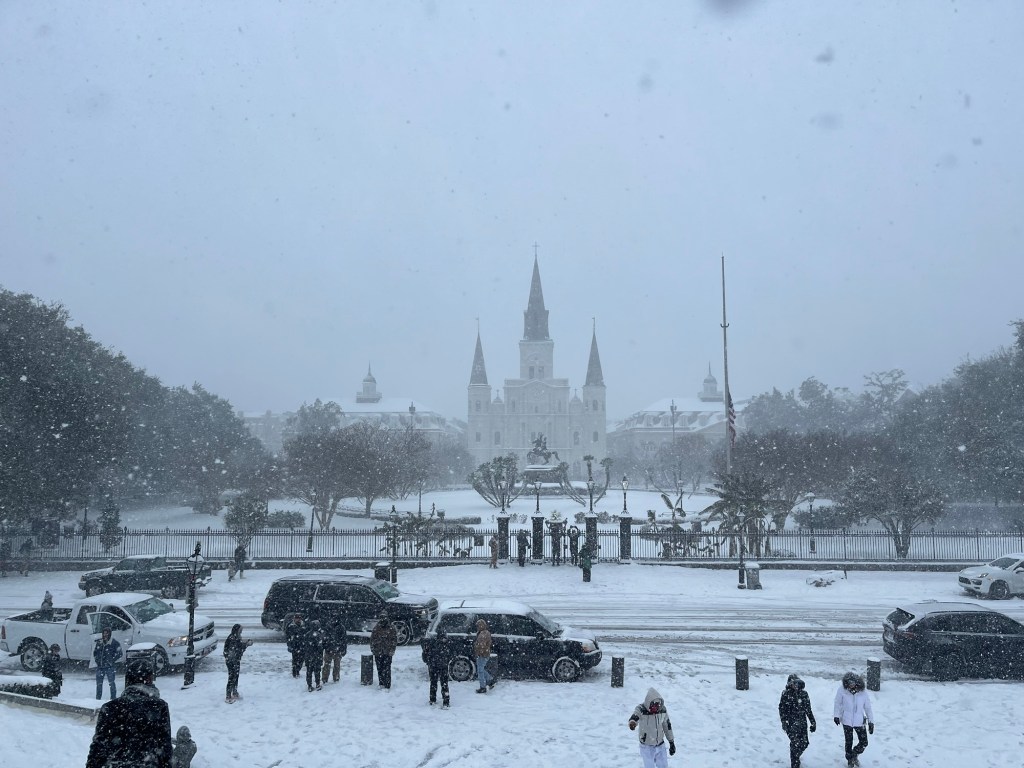
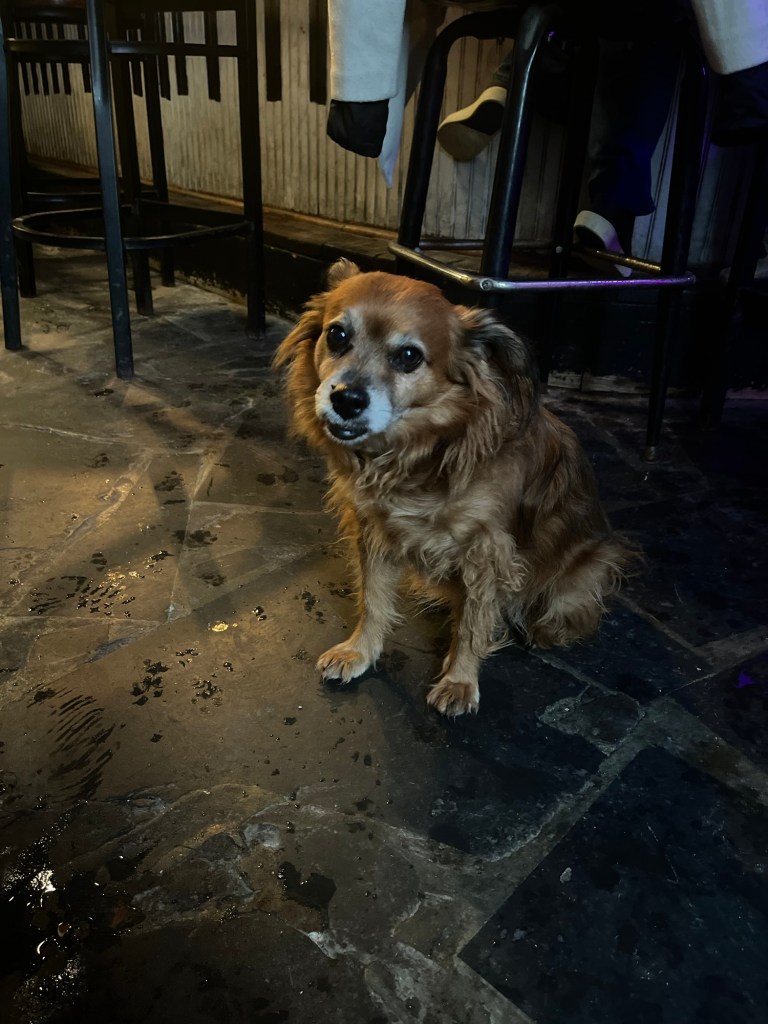
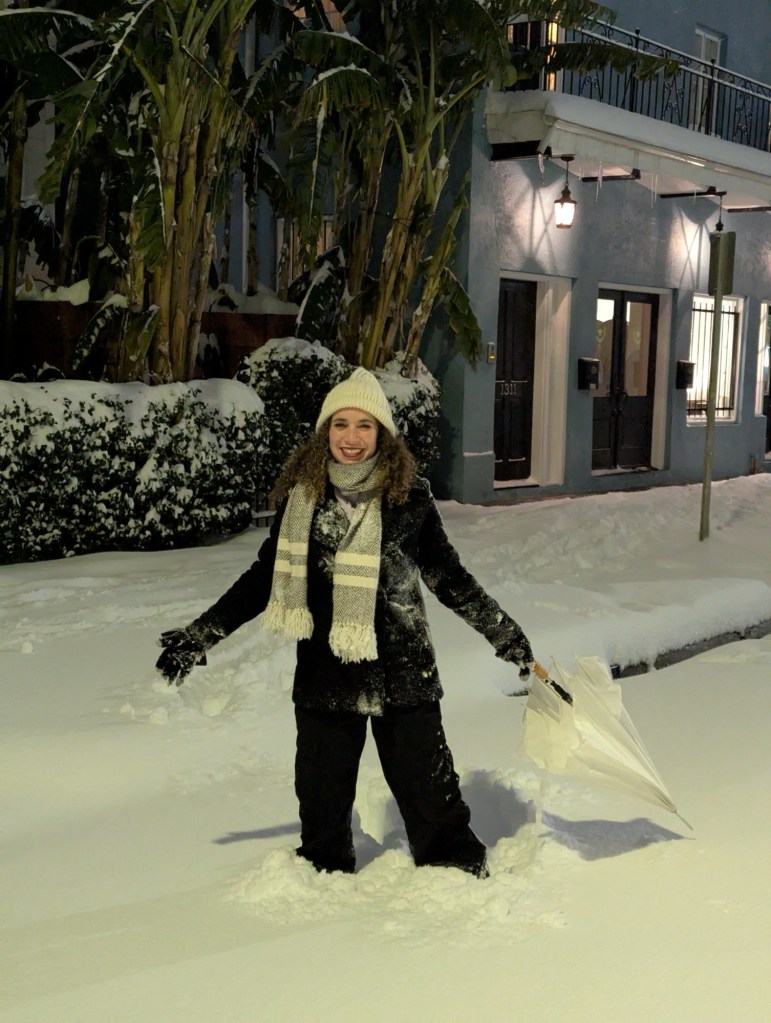
It was a fun day marked by the excitement of knowing we were having an experience very few have ever had in New Orleans.
By now – day two – the novelty has begun to worn off. Yesterday’s soft snow has melted and frozen over into ice, making it nearly impossible for any cars to safely drive on the few open roads. Walking is our only option, but it’s becoming challenging not to slip. Most businesses, including ones we’d have liked to frequent, are still closed along with the highways and bridge. While the first day of the storm felt like an extension of our holiday, the second day has us feeling a bit trapped. That’s why we didn’t hesitate to book the rare opening for a ghost tour that evening.
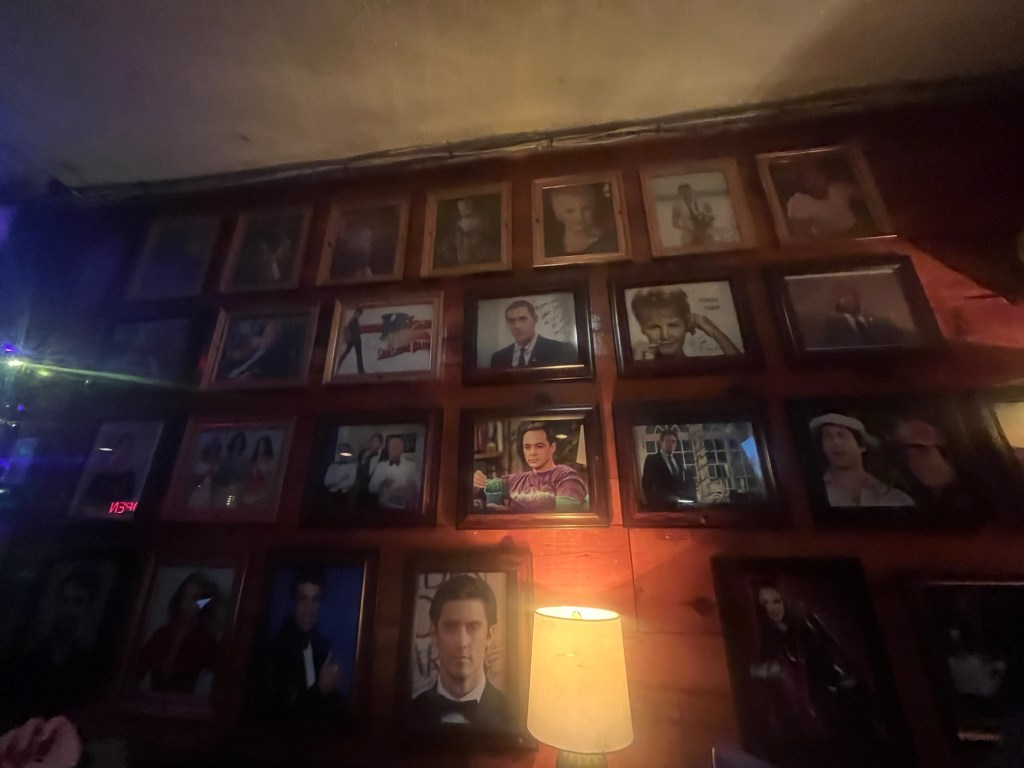
We open the doors to the Voodoo Lounge, our meeting place for the French Quarter Phantoms ghost tour. It’s been a healthy 45-minute walk from our hotel to the French Quarter, prolonged by the extra caution we had to take to ensure we don’t slip on the ice. The warmth of the bar is almost suffocating compared to the cold outside. It’s dark within, with pictures of all sorts of celebrities randomly hung on the walls. We stop by the counter to pick up our drink tickets (each ghost tour participant receives 1 free drink) and collect two Hurricanes for the tour. There’s a crowd of about 10-15 other similarly stranded tourists waiting with us.
New Orleans is widely regarded as the most haunted city in the United States. Despite this, we didn’t prioritize a ghost tour enough to put it on our original itinerary. I am not one for horror films or gore, so my partner and I thought we’d pass on any ghost tours during our visit. It scared me enough that I’d discovered our hotel was rumored to be haunted just days before our visit. We’d only signed up for this one because, with yet another flight home cancelled, we’d found ourselves with another free night on our hands. Not knowing if it would be the last night of our trip, we wanted to still get to know the city even if the parades had been cancelled and most businesses closed. This particular tour group was the only one leading ghost tours that night, so we jumped on the opportunity.
Our tour guide, Kathryn, is an older woman who has lived in New Orleans all her life. She instructs all of us to gather around outside on the sidewalk, asking us to take care to watch our footing so as not to slip – a warning that begs repeating for all us adults downing our Hurricanes so as not to have to hold them a moment longer in the cold.
“Before we get started, there’s one thing I need you all to know,” Kathryn emphasizes, her voice cutting through the still, frigid air. “This is not Disneyland.”
I blush. I grew up going almost exclusively to Disneyland for family vacations, so throughout our visit to New Orleans I’d been making comparisons between the real New Orleans and Disney’s rendering of it. But what had previously felt like a fun comparison now seems juvenile and inappropriate.
“I need you to know where you are,” Kathryn says. She goes on to say that she’s lived in New Orleans for over 60 years, and while of course this is a ghost tour, it’s important we understand the history behind everything we’re about to hear.
“You’re coming here at a unique time. Usually when I do these tours, there’s live music, and cars, and people drinking and partying. It’s so loud. But not tonight.” Kathryn’s voice is the kind that would compel anyone to stop and listen. She has a commanding yet warm cadence – passionate and emphatic, but not theatrical. “Tonight, you can hear the city in a way that most people never do. Oh, please go ahead, baby.” Kathryn steps off the sidewalk to let a woman pass before continuing, her friendly New Orleanian manner showing in her speech. “This is a city that was built by slaves. It thrived on slavery. Not a fun fact, but it’s the truth. It’s our history. So once again, I ask you to know where you are. This is not Disneyland. Let’s go.”
As Kathryn has promised, she ensures we get to know New Orleans before diving into any ghost stories. She stops us early on to point out that the buildings we might have seen throughout the city – ones that have a main house with units behind them or in courtyards – once housed enslaved peoples. I recognize it, as the hotel we’re staying at has the same structure. Kathryn points to the brick walls we’ve seen all over the city as we walk as well. Those, too, had been placed by enslaved peoples.

If my picture of New Orleans had been parades and partying, then the history I’m learning is the frame. Kathryn’s determination to convey the full identity of New Orleans, from its literal construction by enslaved peoples to its forever changed demographic post-Hurricane Katrina, ensures I’ll never forget the full picture.
Kathryn leads us through the icy streets to several key sites for the ghost and vampires portion of our tour. There’s the Gardette-LaPretre Mansion, where a mass murder of a purported Turkish Sultan supposedly occurred; the Vampire Cafe, where Kathryn shares a story about two self-proclaimed murdering vampires who were caught, sentenced to death, and buried – only for authorities to find their bodies had mysteriously disappeared a year and a day later. We stop by the Andrew Jackson Hotel, which is rumored to be haunted by a poltergeist, and the Ursuline Convent that allegedly imprisoned young women who the church claimed were vampires. This convent later became the site of a murder of photographers whose blood was drained from their bodies, which the city’s officials explained could only have occurred through “vigorous, violent sucking.” Kathryn admits she’d like that on a T-shirt.
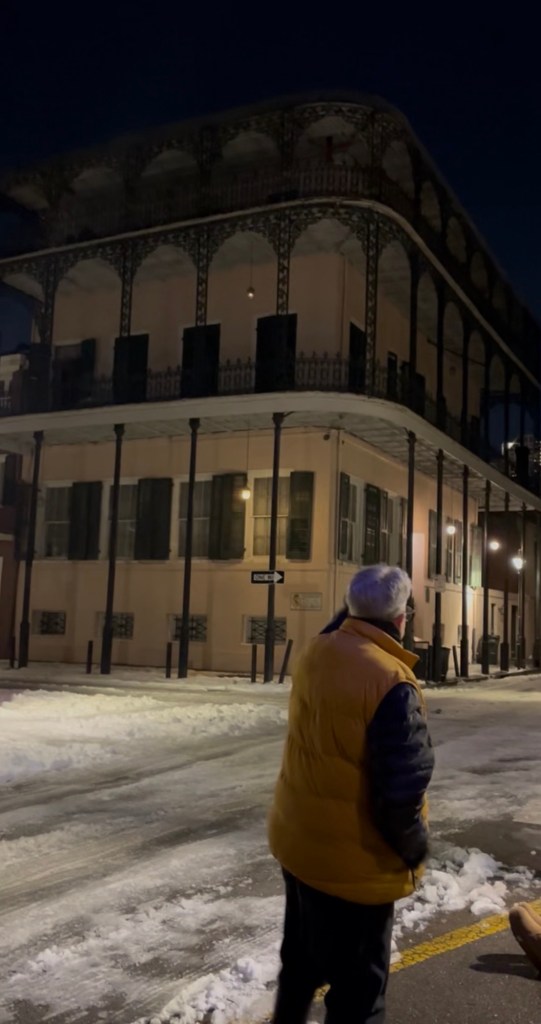
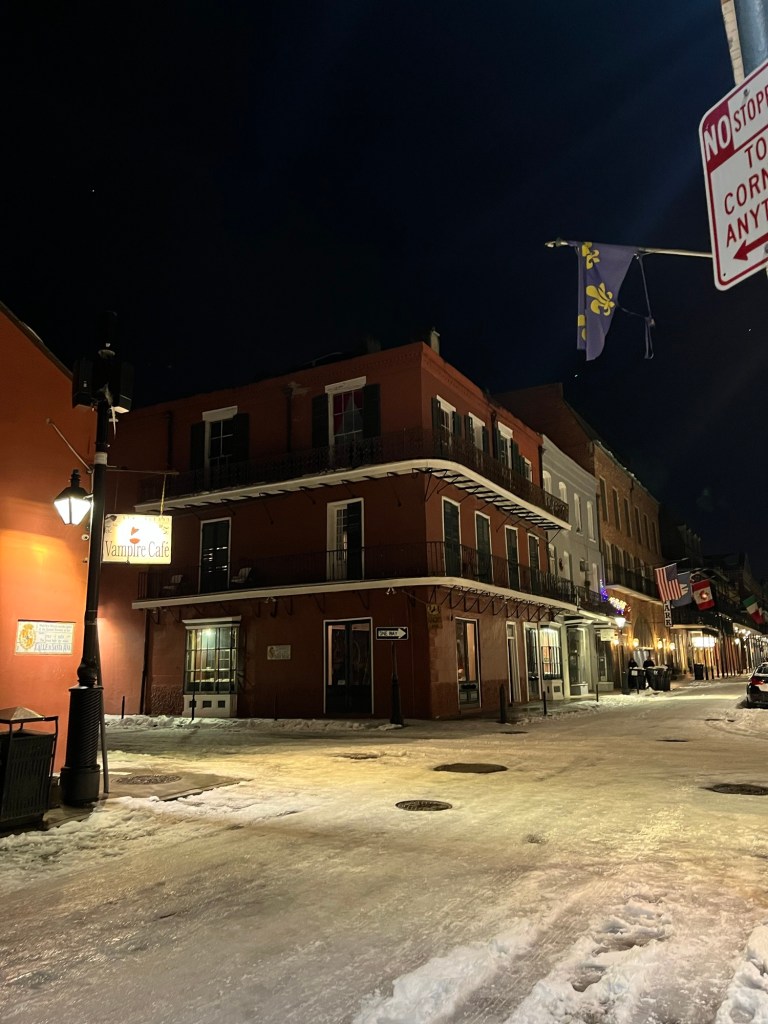
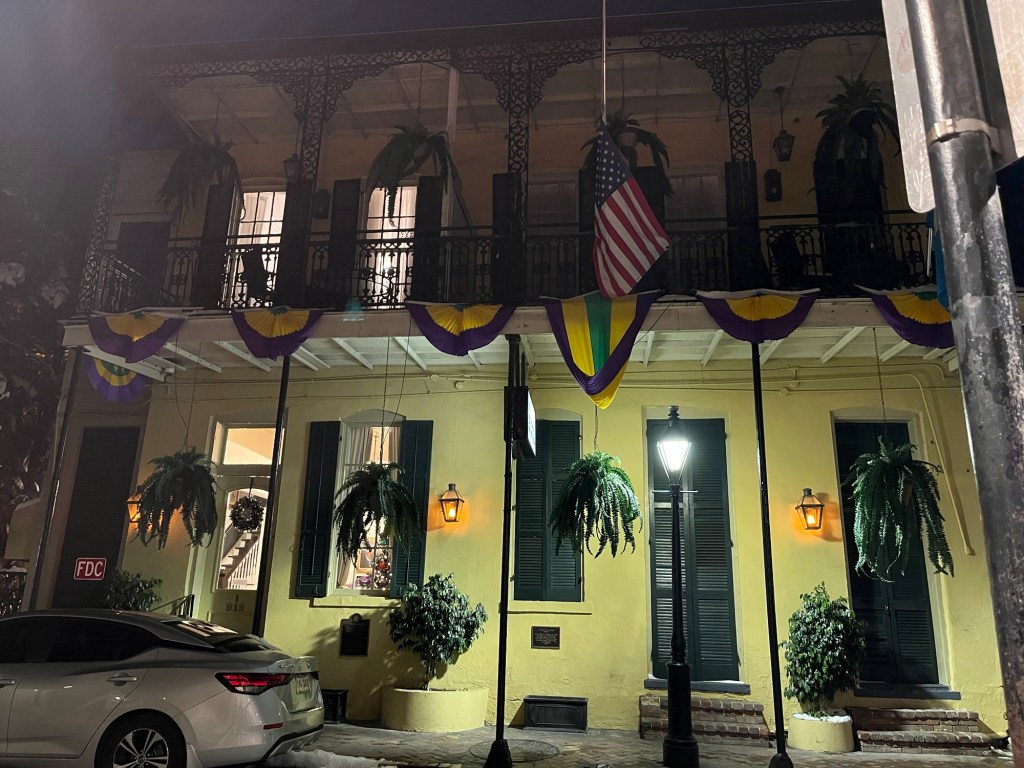
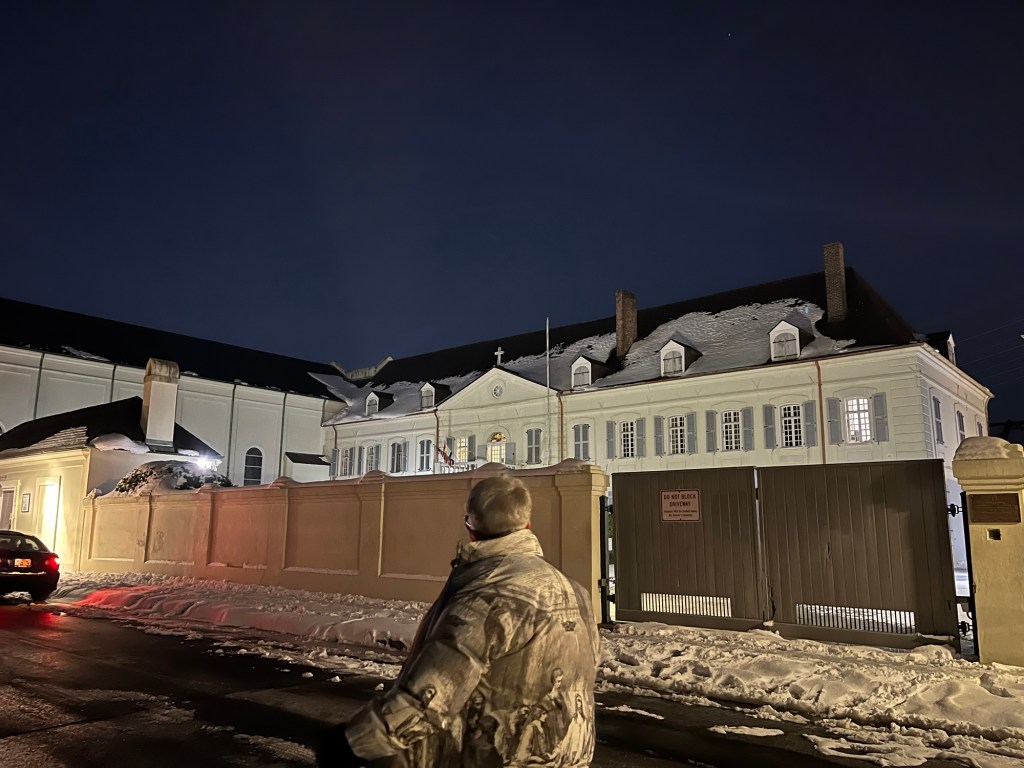
(Note: Even though Kathryn claims that all the stories she tells are documented, I would later learn that most of the supernatural stories have no written record. Make of that what you will.)
As we walk, I catch up to Kathryn. “It hasn’t been the same here since that maniac killed all those people,” she laments, breathing heavy as she takes care to not slip. She’s referring not to a ghost story, but to a different monster – a man who drove a pickup truck through Bourbon Street just a few weeks prior on January 1, killing 10 people and injuring many others.
“I thought it might have just been quiet from the storm,” I say, but Kathryn shakes her head and sighs.
“Even before this storm, it’s been far too quiet for this time of year.”
With all the quiet surrounding this once-in-a-century winter storm, I had almost forgotten that this was peak tourist season. Mardi Gras was right around the corner, after all.
We finally arrive at the infamous LaLaurie Mansion. Kathryn moves us across the street for a full view. Gazing up at the LaLaurie Mansion – an ominous, looming gray building – I’m not sure if it’s the silence in the streets, the anticipation of the story we’re about to hear, or a disturbing presence from the mansion itself, but I feel deeply unsettled. Apparently New Orleanians don’t even dare walk under the mansion’s gallery – their term for balconies held up by pillars – because of the mansion’s dark history and purportedly haunted nature. While I’m not sure I believe in hauntings, there’s something unmistakeably foreboding about the place.
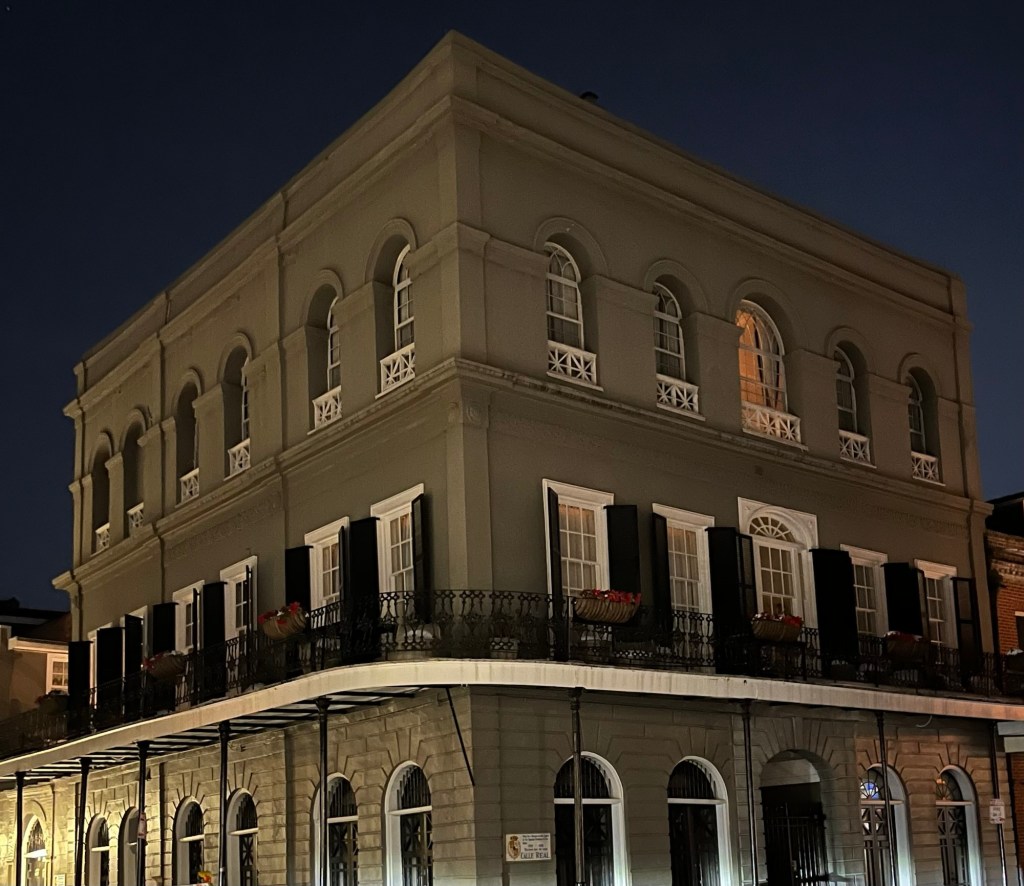
“You might have thought Kathy Bates’s portrayal of Delphine LaLaurie from American Horror Story was scary,” Kathryn begins, “but she was nowhere close to the real Delphine LaLaurie. She is the true American horror story.”
The story of Delphine LaLaurie and her mansion is the culmination of everything Kathryn has shared with us about New Orleans’s history. Delphine was a wealthy socialite who held grand parties in her mansion. She is mostly known today, however, for her abusive and abhorrent treatment of enslaved people. Kathryn walks us through the 1834 fire that consumed the mansion, which she says was started by an enslaved woman who firefighters saw chained in the kitchen. When the firefighters went to help her, the woman purportedly begged them to check out the back of the house. Upon doing so, the firefighters discovered enslaved people who were being tortured in ways beyond imaginable.
Delphine should have been captured and held accountable for her crimes, Kathryn continues, but despite her neighbors’ outrage upon learning of the atrocities she committed, her privilege as a wealthy white woman in the Deep South allowed her to escape New Orleans via Lake Pontchartrain and live out the rest of her life in Paris. Though she died in Paris, she was buried back in New Orleans.
There have been rumors of the mansion being haunted since, perhaps most notably with Nicolas Cage buying the property, boasting about it, and then supposedly needing to leave after one year due to his becoming severely unwell mentally and running into continuous strings of bad luck.
But the most chilling ghost sighting at the LaLaurie mansion was still to come – this time, from Kathryn.
She tells us a story of a time she was leading this very tour when they reached the LaLaurie Mansion. She directed the group to walk across the street, just as she did with us, except it was a typically busy day in New Orleans, so she waited on the corner to help escort people across. There was a child in a stroller on that tour who had been keeping to herself the entire time.
“As I’m leading the last people across the street, I hear a terrible scream,” Kathryn recalls. “I look ahead to see the child slowly rise up in her stroller, arching her back” – Kathryn demonstrates a slow, catlike movement, her body slowly rolling up from her shoulders to her head – “and she points to the mansion, screaming, ‘Mommy, why are there people screaming and crying up there?!'”
Kathryn hadn’t told that group anything about the mansion yet. For that child, who had been so well-behaved and quiet the entire time, to react so strongly at the very sight of the LaLaurie Mansion, was unnerving for Kathryn to witness.
I stifle a shudder, unsure if it comes from the story or the cold, or perhaps both. Haunted or not, I feel sick staring at the mansion. It’s odd thinking that you could visit New Orleans and never realize that enslaved people laid the groundwork for the city to even be a thriving locale for tourists in the first place. Knowing that so many suffered – even if they didn’t endure torture at the hands of Delphine LaLaurie – just for people to party in their streets without any knowledge of their existence, is perhaps the most horrific realization of the entire tour.
We say goodbye to Kathryn and begin our long walk back to our hotel, choosing to take the long way for sightseeing. The streets grow quieter as we move away from the nearby open bars. While the quiet was unsettling before, it’s now making us jumpy. The slick streets make us slip occasionally. Just as I start wishing we had stayed with the rest of the group closer to the small hub of open bars, we see a tall woman, hood over her head, walking toward us. Her knee-high boots cut through the ice with a distinct clipping sound, quick and confident in her footing.
I feel an unreasonable fear at the sight of her. There’s no one else around besides myself, my partner, and this woman. But I have stories of blood-thirsty vampires and murderers at the front of my mind, and my imagination is running wild. I grasp my partner’s hand tighter.
Just as I’m telling myself that I’m overreacting, the woman approaches us, turns her head in our direction, and smirks, her eyes concealed by her hood. I shudder. She then continues walking from where we came.
A pause. And then –
“Do you think she was a vampire?!” my partner asks in a hushed whisper.
“I thought the same thing!” I say.
We look at each other for a second in horror, then laugh, as it’s clear the ghost tour has stayed with us, and agree we should head back to the hotel through the busier streets. But even when we approach open bars and the buzz of people, the walk feels different from the others we’ve taken on our trip. New Orleans has brought us so much joy – powder-crusted, doughy beignets; cheery jazz music from Steamboat Natchez; jubilant locals “sledding” through the powdery snowy streets; jazz bands playing despite the snow falling; dueling pianos; and friendly waiters urging us to return to eat more shrimp and grits. The ghost tour has illuminated the joy of the city, but also its heavy history. One cannot exist without the other, and for the first time, I feel like I do indeed know where I am.
The next morning, we anticipate a cancelled flight announcement, but it doesn’t come. We enjoy one last breakfast in the parlor, bid farewell to the employees who have helped us secure lodging each day, and call a car to the airport. While it takes us over an hour to make the typical 17-minute drive there as the highways are still closed, we’re just grateful that we might actually be able to go home. I still don’t believe it, not until the plane is in the air and we see New Orleans disappear under the clouds.
“Is it too soon to ask if you’d come back?” My partner asks, jokingly.
Right now, I’m just grateful to be heading home, but I know someday I’ll feel ready to return. One day I’ll be back on Bourbon Street, sipping a Mint Julep and surely complaining about the heat. But I’ll never forget where I am, having heard the city’s heartbeat in the silence of a snowstorm.
 The Bay Drifter